4. Taxonomy
- 4.1. Introduction
- 4.2. View a Taxonomy
- 4.3. View Release Notes
- 4.4. Download XML
- 4.5. Download CSV and XSD files
- 4.6. Taxonomy Management
- 4.7. Set Custom Taxonomy properties
- 4.8.
- 4.9. Taxonomy version number and name
4.1. Introduction
The E2 system is built around the ECCAIRS Taxonomy, constituted by ADREP Taxonomy + ECCAIRS/EU specific Taxonomy. While most of it is centrally maintained, per specific governance through the NA’s established Data and Quality Working Group, there is also the possibility for Authorities to maintain their own Custom Taxonomy, which allows them to adapt their usage of E2 to their own processes. The same applies to the SRIS Taxonomy for safety recommendations.
To access the Taxonomies, the National Security Administrator has to access the Taxonomy menu.

The system will display the list of Taxonomies in force for the Authority of the National Security Administrator. It includes the Custom and Central Taxonomies released and ECCAIRS and SRIS Taxonomies depending on the Authority type (NAA, SIA or both).
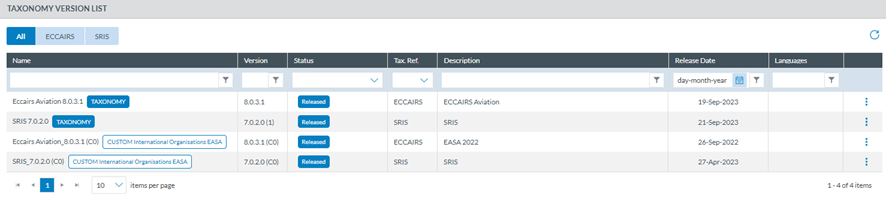
National Security Administrators can filter ‘All’, ECCAIRS and SRIs Taxonomies through the tabs displayed above the table.
The table of Taxonomies present the following columns that also work as filters:
· Name: unique for each Taxonomy
· Version: your digits separated by dots
· Status: it can be:
ü Archived
ü Draft
ü Released
· Taxonomy Reference: it can be:
ü ECCAIRS
ü SRIS
· Description
· Release Date
· Languages: for now, there are not translations
If the National Security Administrator has the National Taxonomy Administrator role, the list of Taxonomies will also include the Authority's Custom Taxonomies in all the status, if exist.
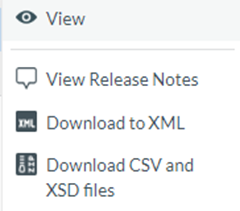
The last section of each row provides a 3-dots menu with the following options for archived Taxonomies:
The Released Taxonomies provide the following options:
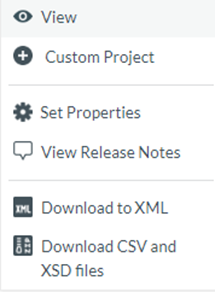
The Custom Project option is shown only if a Draft version of the Taxonomy does not exist.
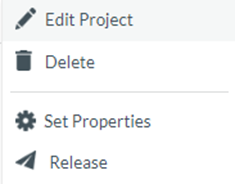
The Draft Taxonomies provide the following options:
4.2. View a Taxonomy
National Security Administrators have to click on the 3-dots menu ‘View' option and the system will display the Taxonomy Structure tab.
The Taxonomy tree and the search bar are displayed on the left side of the screen. They can be hidden by clicking on the 'arrow' icon. The left panel is resizable by clicking on the 3-dots menu and moving it to the left or to the right.
The National Security Administrator can navigate through the tree by unfolding the arrows and clicking on the displayed elements. On the right side, the information of the selected element will be displayed.
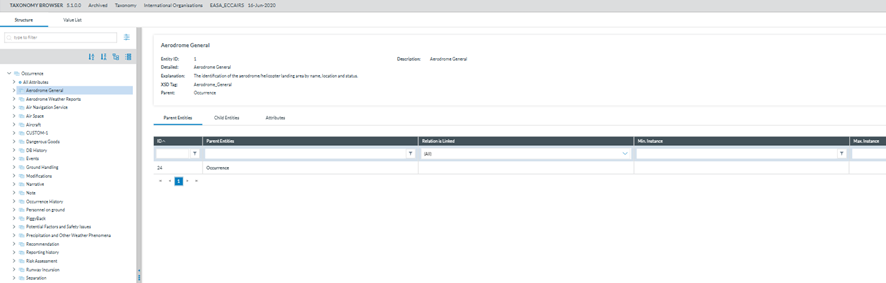
Note that the View option only provides view menus and not editing or management options.
4.2.1. Search box
It is under the Structure Tab. The Value list tab and its navigation is explained in the Taxonomy Values Lists section.
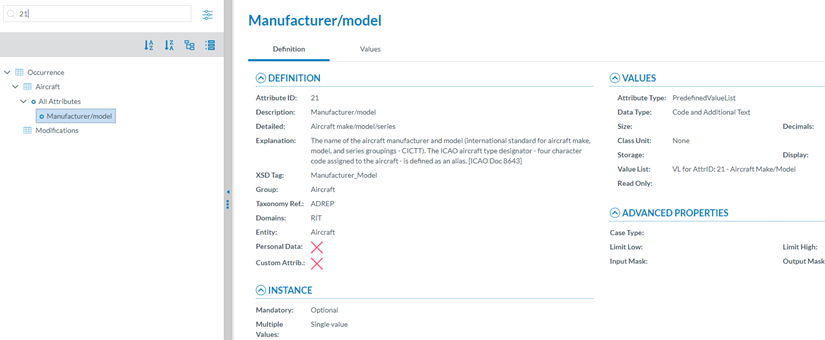
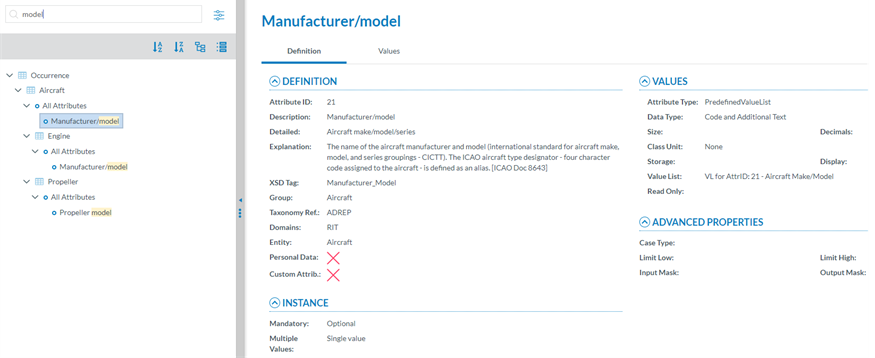
Entities and Attributes can be found by typing the Taxonomy Code or the Description in the Search box.
· By Taxonomy Code:
· By Description:
If the National Security Administrator clicks on the 'Advanced search' button, a layer with more filters will be displayed.
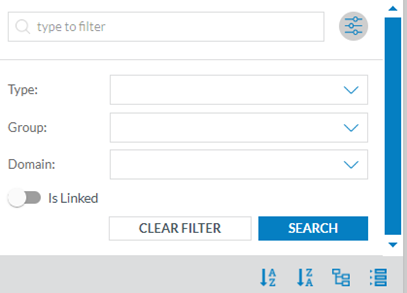
For each filter the National Security Administrator can select as many values as needed. Then, the National Security Administrator has to click on the 'Search' button to refresh the tree with the introduced filters.
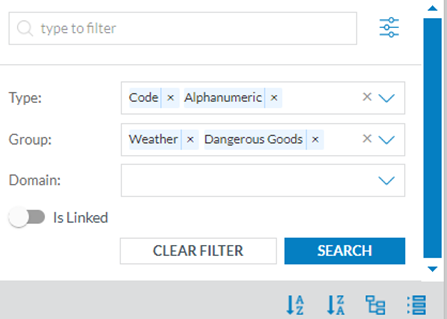
The Taxonomy tree can be ordered alphabetically by clicking on the 'A-Z' icon or 'Z-A' icon: 
All item of the Taxonomy tree can be collapsed and expanded through the following buttons:
4.2.2. Filter the information
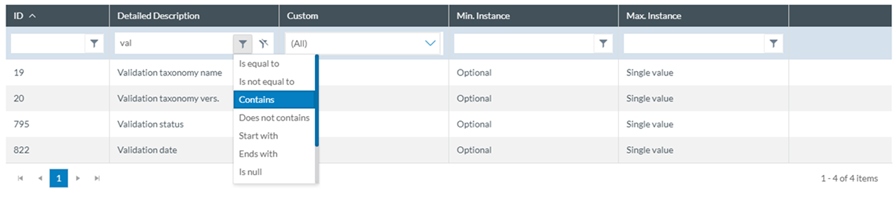
The National Security Administrators can filter the table of Parent Entities, Child Entities and Attributes by typing the term to be searched in the filter row. They can restrict the results by clicking on the ' filter' button, by default 'contains' condition is selected.
To delete the filter, the National Security Administrator has to click on the '  clear filter' icon.
4.2.2.1 View detailed information
To view more information of the select Entity, the National Security Administrator has to click on the 'eye' icon.

To view more information about the Parent Entities, Child Entities or Attributes, the National Security Administrator has to click the 'eye' icon that appears while moving the mouse over the row.
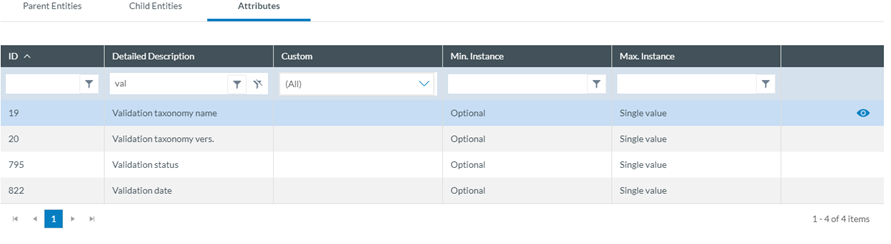
A slide-in panel with the element information will be displayed when clicking on the' eye' icon. The National Security Administrator has to click outside the panel to close it and go back to the previous screen.

4.2.3. Taxonomy structure
ECCAIRS and SRIS Taxonomies have the same structure:
· Entities
· Attributes
· Value Lists
· Values
4.2.3.1. Entities
· Entities are used to represent items to which a set of Attributes can be associated.
· An Entity can be, for example, the “Aircraft" involved in the incident-accident or the related “Events" description.
· There may be multiple instances of an Entity since more than one of these items can be involved in an occurrence.
· Entities may have child entities: “Engine" is child Entity of the “Aircraft" Entity.
· Entities can be linked to other entities.
4.2.3.2. Entities information
Entities in the Taxonomy tree are marked with  icon. When the Entity is a Linked Entity, it is also marked in green colour.
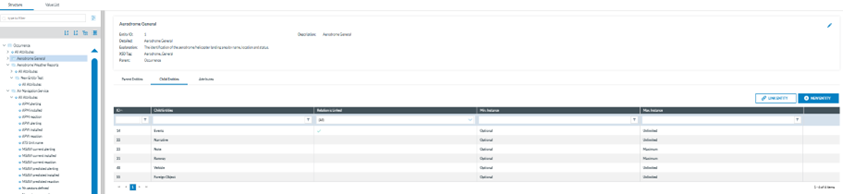
The following information will be displayed in the right side of the screen when the National Security Administrator clicks on an Entity in the Taxonomy tree:
· Entity information: A brief summary of the selected Entity
· Parent Entities: The list of its parent Entities
· Child Entities: The list of its children Entities
· Attributes. The list of its Attributes
The National Security Administrator have to click on each tab (Parent Entities, Child Entities, Attributes) to view its information.
4.2.3.3. Attributes
Attributes describe properties/values associated to an Entity.
An Attribute of the “Aircraft” Entity is, for instance, its "manufacturer/model".
Attributes can have single or multiple values.
Attributes can be of the following types:
· Number
· Decimals
· Text
· Alphanumeric
· Date
· Time
· DateTime
· Longitude
· Latitude
· Code
· Code and Additional Text
· Code or Alternative Text
· ECCAIRS Resource Locator
· ECCAIRS Data Link
· ECCAIRS Embedded Data
4.2.3.4. Attributes information
The Attributes are marked with  icon in the Taxonomy tree.
The National Security Administrator can view the information of an Attribute from two places in the Taxonomy Browser:
· Finding it on the Taxonomy tree and clicking on it.
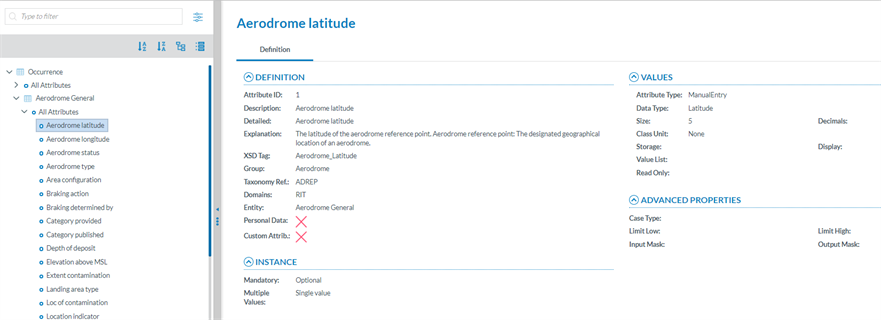
· Selecting the Entity the Attribute belongs to and clicking on the 'Attribute' tab. The National Security Administrator will see all the Attributes of the selected Entity.

Click on the 'Eye' icon to view the detailed information.
· Definition tab:
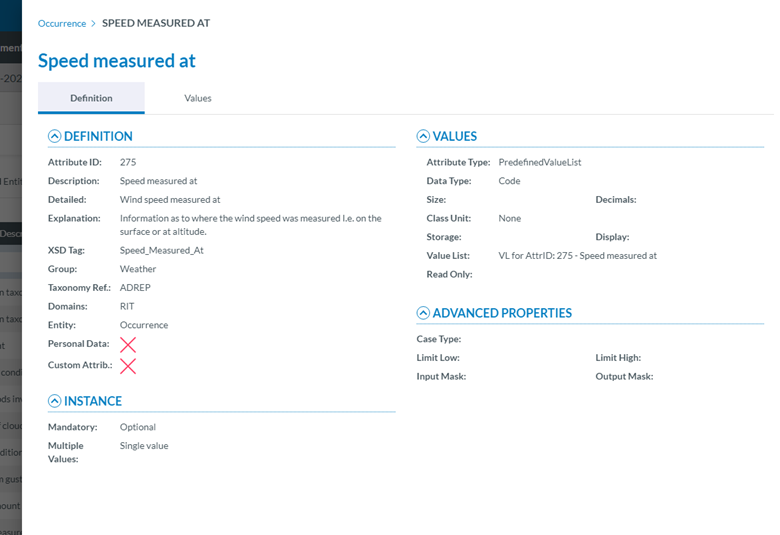
· Values tab:
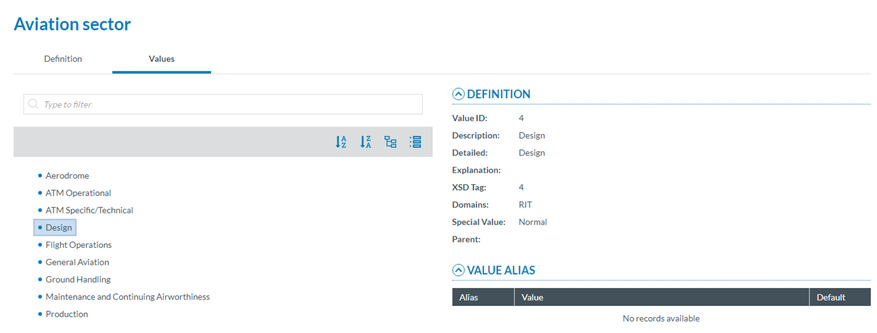
If the Attribute has a predefined value List. In the Values tree, the National Security Administrator can navigate through the values by clicking on each element. The selected Value will display its definition and the Values can be searched by Taxonomy code or Description and ordered alphabetically.
4.2.4. Taxonomy Values Lists
The list of predefined values an Attribute can have is defined in a Value List. The Value List can have multiple level where values are organized in a tree mode. Value list can have Alias.
The National Security Administrator have to click on the Taxonomy Value Lists tab to obtain the list of Value Lists of the Taxonomy:
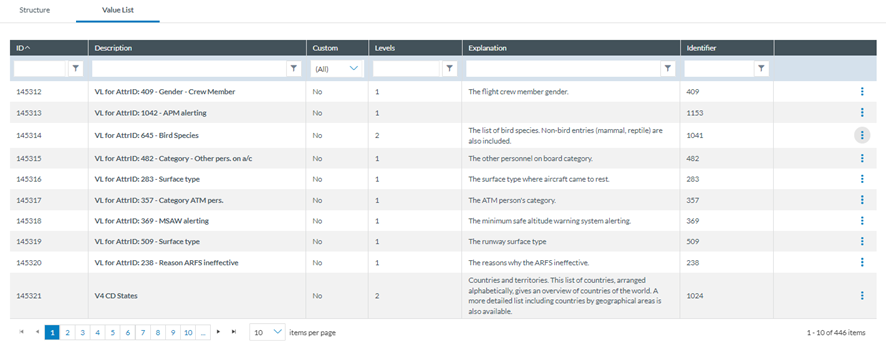
The table of Value Lists provides the following columns that also work as filters:
· ID: it is the internal id automatically generated and unique for each Value List
· Description: unique for each Value List and mandatory
· Custom: for National Security Administrators it is always ’No’. Only Authorities can manage Custom Value Lists
· Levels: number of levels of the Value List
· Explanation: optional
· Identifier: unique for each Value List which does not change with Taxonomy releases
The last section of each row provides a 3-dots menu with the options to be explained.

4.2.4.1. View a Value List
National Security Administrators have to click on ‘View Value List’ option of the 3-dots menu of the specific Value List and the system will display the View page:
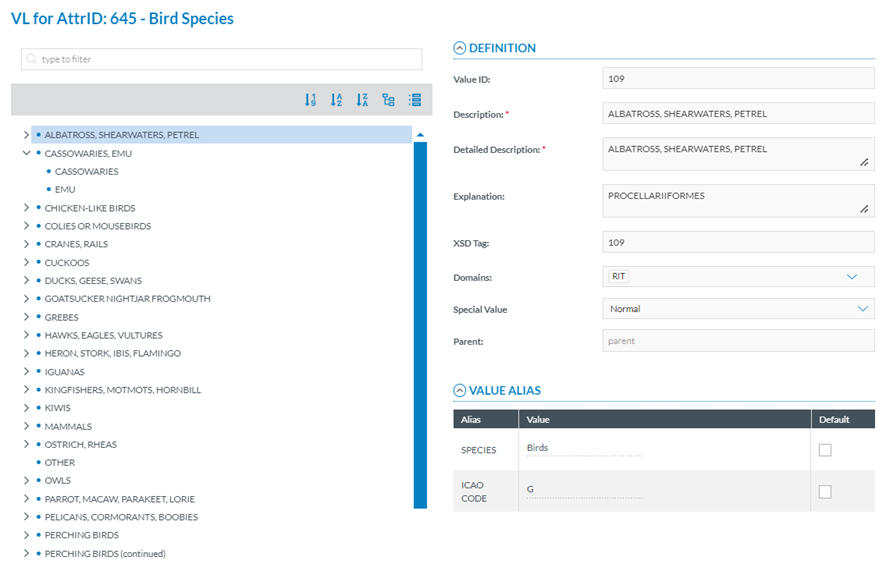
It displays the Value tree in the left panel according to the Value List levels.
National Security Administrators have to click on one of the Value of the Value tree and the system will show its details in the right panel:
Definition:
· Value ID: identifier of the Value in the Value List. unique for each Value in the Value List which does not change with Taxonomy releases
· Description: mandatory free text field
· Detailed Description: mandatory free text field
· XSD Tag: it reproduces the information of the Value ID
· Domains: optional drop-down menu with the Domains to be selected
· Special Value: drop-down menu with the following options:
· Normal: Selected by default
· None
· Other
· Unknown
· Parent: it is not editable
Value Alias:
· Alias: name of the Alias
· Value: Alias value for the given Value
· Default: Yes/No
4.2.4.2. View Value List Properties
National Security Administrators have to click on ‘View Value List Properties’ option of the 3-dots menu of the specific Value List and the system will display the View Value List Properties page:
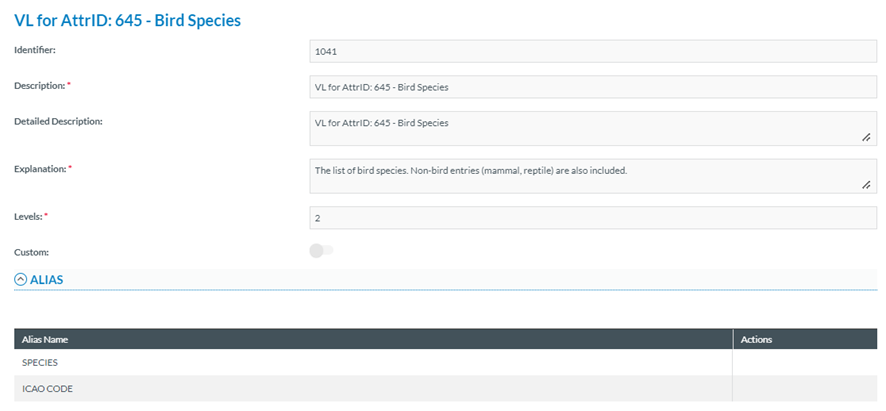
It provides the following fields:
· Identifier: unique for each Value List which does not change with Taxonomy releases
· Description: name of the Value List
· Detailed Description: optional free text field
· Explanation: mandatory free text field
· Levels: number of levels
· Custom toggle: not applicable for Central Taxonomies Value Lists
Below the fields there is the Alias information with the structure for the table of Alias (Alias Name and Actions columns).
4.3. View Release Notes
It opens the Release Notes of the specific Taxonomy:
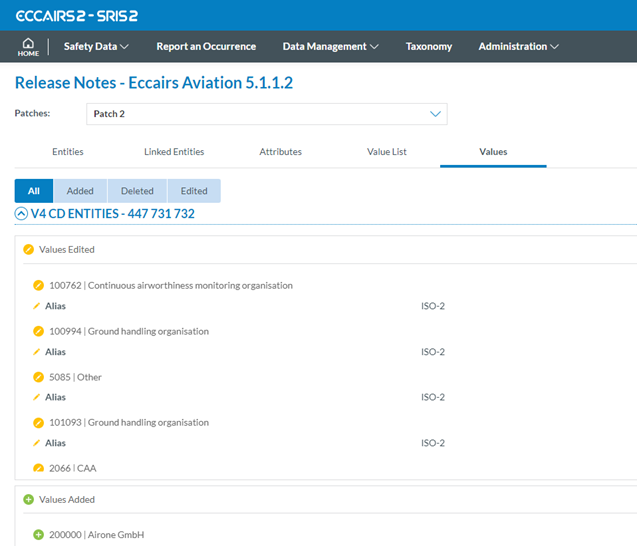
The page provides the following tabs with the corresponding release notes:
· Entities: added, changed and delete entities
· Linked entities: added or delete links between entities
· Attributes: added, changed and deleted Attributes
· Value List: added, changed and deleted Value Lists
· Values: added, changed and deleted values in Value Lists
4.4. Download XML
It downloads the Taxonomy in XML format.
4.5. Download CSV and XSD files
It downloads a zip of the Taxonomy in the selected formats.
4.6. Taxonomy Management
As mentioned, National Aviation Authorities and Safety Investigation Authorities can maintain their own Custom Taxonomy, which allows them to adapt their usage of E2 to their own processes.
4.6.1. Create a Custom Taxonomy
National Security Administrators have to click on ‘Custom Project’ option of the 3-dots menu of the specific Central released Taxonomy of the list, if a Custom released Taxonomy does not exist yet.
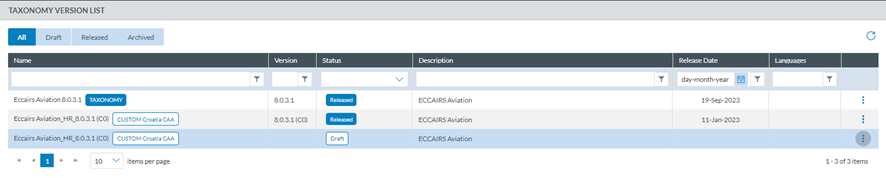
If a Custom released Taxonomy exists for the Authority, the 'Custom Project' option of the 3-dots menu will be available on it and the system will create a Draft version of that Custom Taxonomy where the changes can be done.
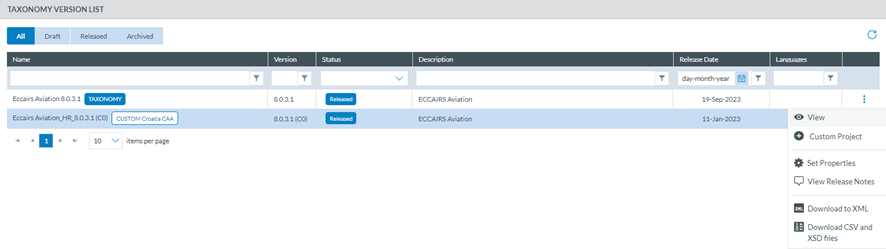
Once created, the Draft version of the Custom Taxonomy will be displayed in the list of Taxonomies:
4.6.2.Taxonomy management - Structure
National Security Administrators have to click on ‘Edit Project’ option of the 3-dots menu of the specific Draft Custom Taxonomy of the list. The system will display the editing page:
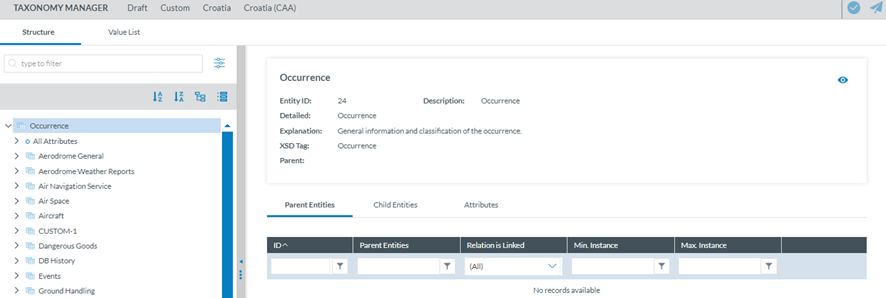
At Authority level, only Custom Attributes and Custom Value Lists can be updated.
4.6.3. Attributes Management
National Security Administrators have to click on the Attributes tab of the specific Entity at the Entities information page, and the system will display the table of Central and Custom Attributes defined for that Entity:

Above the table, there is a ‘New Attribute’ button for the Authority to create new Custom Attributes.
The table of Attributes provides the following columns that also work as filters:
· ID: automatically generated, mandatory and unique for each Attribute (Taxonomy code)
· Description: unique for each Attribute and mandatory
· Custom: if it is Custom Attribute, it will provide a green tick
· Mandatory: it sets if the Attribute is Mandatory or Optional
· Multiple Values: it sets if the Attribute is singled value, limited or multiple values
The last section of each row provides an Edit and a Delete icon.
4.6.3.1. Create a Custom Attribute:
National Security Administrators have to click on ‘New Attribute’ button above the table of Attributes and the system will display the New Attribute page:
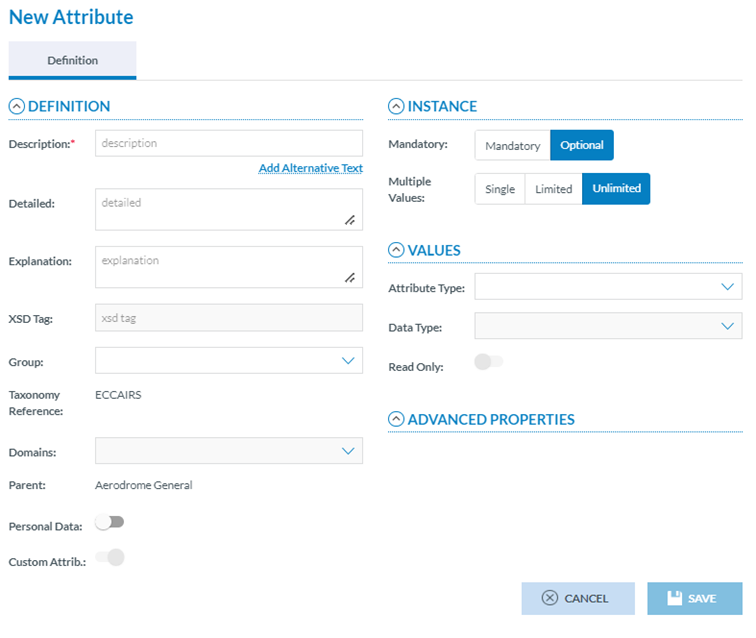
National Security Administrators have to fill in at least the Description which is the only mandatory field.
XSD Tag and Type are empty and not editable.
The Taxonomy Reference, Domain and the Parent are automatically set and not editable.
The Custom Attribute field is not editable and is set to on by default.
The rest are optional or editable.
Definition Information:
· Detailed: free text field
· Explanation: free text field
· Group: drop-down menu to select among the available groups
· Personal Data toggle: deactivated by default. If activated, the Attribute corresponds to personal data
Instance information:
· By default, Optional is set. National Security Administrators can update it to Mandatory.
· Multiple Values: by default, Unlimited Values is set. National Security Administrators can update it to Single or Limited
Values Information:
· Attribute Type: drop-down menu to select:
ü Manual Entry
ü Predefined Value List
· Data Type: drop-down menu depending on the Attribute Type to select:
ü Manual Entry
o Alphanumeric
o Date
o DateTime
o Decimals
o Eccairs Data Link
o Eccairs Embedded Data
o Eccairs Reource Locator
o Latitude
o Longitude
o Number
o Text
o Time
ü Predefined Value List
o Code
o Code and Additional Text
o Code or Alternative Text
· Value List: name of the Value List to associate to Predefined Value List Custom Attributes. It can be a Value List of the Central Taxonomy or a Value List of the Custom Taxonomy
Advanced Properties Information:
· For Manual Entry Attributes (depending on the data type):
ü Case type:
o None
o Uppercase
o Lowercase
o ProperCase
o FirstLetter
ü Limit Low
ü Limit High
ü Input Mask
ü Output Mask.
· For Predefined Value List Attributes:
ü Case type:
o None
o Uppercase
o Lowercase
o ProperCase
o FirstLetter
National Security Administrators have to fill in the mandatory information and the needed optional information and click on ‘Save’ button. The system will save the Custom Attribute in the database and will add it to the Taxonomy browser of the Custom Taxonomy and to the table of Attributes of the specific Entity.
4.6.3.2. Edit a custom Attribute
National Security Administrators have to click on the Edit icon of the specific Custom Attribute of the table of Attributes of the Entity and the system will display the Edit Attribute page:
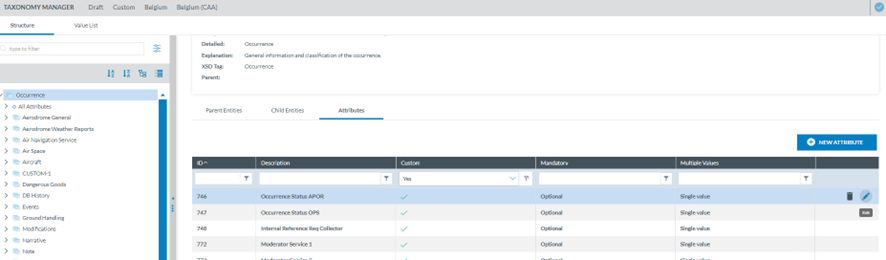
It is like the previously explained New Attribute page with the addition of the ID, automatically generated and with the XSD Tag Generator button if the Attribute was created in the current Draft version of the Custom Taxonomy for the first time.
This button opens the following radio buttons:

· Use Description: selected by default. It makes use the Description set for the Attribute to generate the XSD Tag.
· Use Identifier: if selected, the XSD Tag is generated through a Taxonomy Code.
National Security Administrators can update the needed fields always leaving the mandatory information filled. Then, they have to click on the ‘Save’ button and the system will update the information in the database and in the table of Attributes.
National Security Administrators can edit Central Attributes only to provide an Alternative Text to its description which can be shown in the Views where it is indicated. For example, to translate the Attribute Description to the Authority's preferred language.
4.6.3.3. Delete a Custom Attribute:
National Security Administrators have to click on Delete icon of the specific Custom Attribute at the table of Attributes and the system will display a warning message, if National Security Administrators confirm the action the Custom Attribute will be deleted from the database, from the table of Attributes and from the Taxonomy browser of the specific Custom Taxonomy.
Only Custom Attributes created in the Draft version of the Taxonomy can be completely deleted. If an Attribute already exists in a Custom Taxonomy that has been released or a Custom Taxonomy that is archived, it cannot be deleted but inactivated.
4.6.4. Taxonomy management – Value List
Once in the Draft version of the Custom Taxonomy, National Security Administrators can click on the Value List tab:
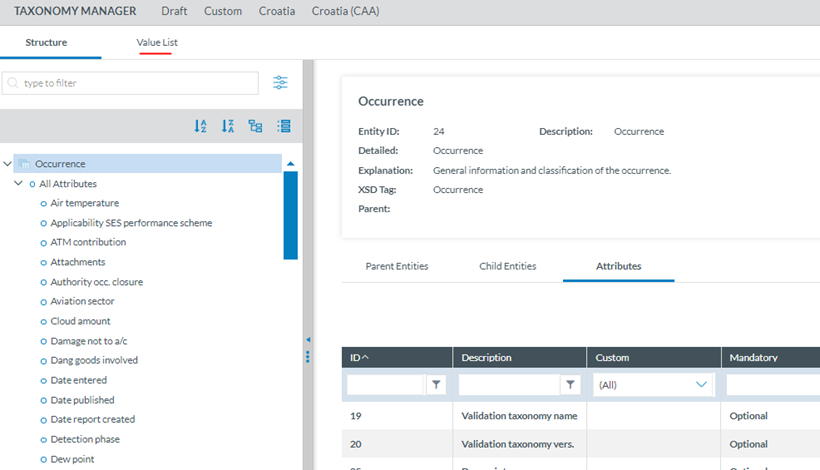
and the system will display the Value List tab with the table of Value lists:
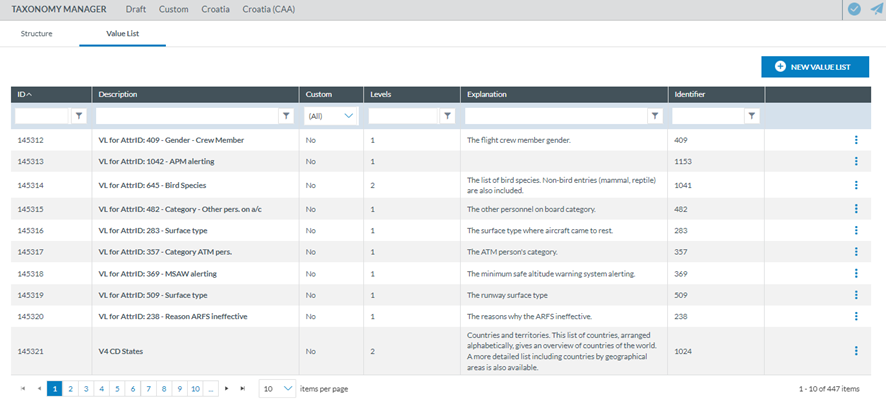
Above the table there is a ‘New Value List’ button for the Authority to create new Custom Value Lists.
The table of Value Lists provides the following columns that also work as filters:
· ID: it is the internal id automatically generated and unique for each Value List
· Description: unique for each Value List and mandatory
· Custom: (Yes) if it is a Custom Value List belonging to the Authority's Custom Taxonomy or (No) it the Value List belongs to the Central Taxonomy
· Levels: number of levels of the Value List
· Explanation: optional
· Identifier: unique for each Value List which does not change with Taxonomy releases
The last section of each row provides a 3-dots menu with the options to be explained.
This section can provide a locker meaning the Value List is locked to an export process, it will not be unlocked unless a new version of the Value List is imported to the system or it is unlocked by the user who exported it and there is not an import process running.
4.6.4.1. Create a Custom Value List
National Security Administrators have to click on ‘New Value List’ above the table of Value Lists (See image above) and the system will provide the New Value List page:

It provides the following fields:
· Description: it is mandatory and has to be unique
· Detailed Description: optional free text field
· Explanation: mandatory free text field
· Levels: number of levels. By default, the system sets 1 but it is editable to a max of 10 levels
· Custom toggle: not editable for National Security Administrators and enabled
Below the fields there is the Alias information with the ‘Add Alias’ button and below the structure for the table of Alias (Alias Name and Actions columns).
National Security Administrators have to fill in the mandatory and the needed information, including the Aliases, if required. To add Aliases, National Security Administrators have to click on ‘Add Alias’ and the system will open the Alias drop-down menu:

It provides the Alias Support Table of the Administration menu. See section Support Tables for more details. National Security Administrator has to select an Alias and click on the Disk icon that will be enabled. The X icon is to discard the selection.
Once the Alias is selected, the Disk Save icon turns into a Delete icon:

National Security Administrators can repeat the operation as many times as needed. Then they have to click on ‘Save’ button and the system will save the Custom Value List in the database and will add it to the table of Value Lists.
4.6.4.2. Edit a Custom Value List
Only not locked Custom Value Lists can be edited. National Security Administrators have to click on ‘Edit Value List’ option of the 3-dots menu of the specific Custom Value List and the system will display the Edit Value List page:

National Security Administrators have to add Values to it through the New Value button. This button opens the Value information of the Custom Value List page:

It provides a Definition area with the following fields:
· Value ID: numeric field and automatically generated but editable. If edited, XSD tag field, which is not editable and is based on the Value ID, will be updated with the same value
· Description: mandatory free text field
· Alternative description: which will be shown in the Views where it is indicated. Authorities can use this filed to translate the description of the value to another language.
· Detailed Description: mandatory free text field
· XSD Tag: not editable. It reproduces the information of the Value ID
· Domains: not editable for Custom Value Lists
· Special Value: drop-down menu with the following options:
ü Normal: Selected by default
ü None
ü Other
ü Unknown
· Parent: it is not editable
It also provides a Value Alias area with the list of Aliases of the Value List, if exist:

National Security Administrators have to fill in the Value and check the ‘Default’ check box if needed.
If no Alias had been added to this Custom Value List, to add it, National Security Administrators have to do it through the ‘Set Value List Properties’ option of the 3-dots menu of the Custom Value List at the table of Value Lists. To be explained in later sections.
Once National Security Administrators have filled in the mandatory information and the needed information, the system saves the information in the database and updates the information of the Custom Value List and the table of Value Lists.

To Add more values, National Security Administrators have to click on the specific Value of the left pane and the ‘New Value’ button will be activated and the right panel will disappear.
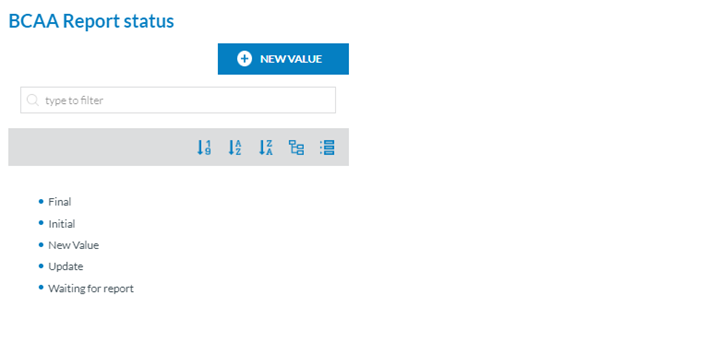
Then National Security Administrators can click on ‘New Value’ to add another value.
National Security Administrators can update the editable information always keeping the mandatory information filled in and click on ‘Save’. The system will save the information in the database and will return to the table of Value Lists with the updated information.
National Security Administrators can edit Central Value Lists only to provide an Alternative Text to its values which can be shown in the Views where it is indicated. For example, to translate the Value Description to the Authority's preferred language.
4.6.4.3. View a Value List
This option is only available in the 3-dots menu of the specific Custom Value List if it is locked or in the 3-dots menu of the specific Central Value List. National Security Administrators have to click on ‘View Value List’ option of the 3-dots menu and the system will display the View Value List page:
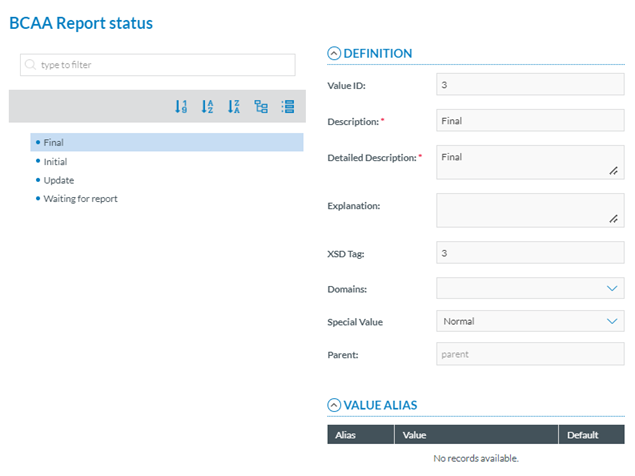
It is like the previously explained editing page but it is not editable.
4.6.4.4. Set Custom Value List Properties
National Security Administrators have to click on the Set Value List Properties option of the 3-dots menu of the table of Custom Value Lists and the system will display the Set Value List Properties page:

The page provides the same information as the New page plus an automatically generated Identifier. The functionality works in the same terms of the creation page previously explained.
Note that if an Alias is removed from the list, the related values, if existing, will also be deleted.
National Security Administrators can update the needed fields always keeping the mandatory information field. Then they have to click on ‘Save’ button and the system will save the updates in the database and will update the table of Value Lists accordingly.
4.6.4.5. View Value List Properties
This option is only available in the 3-dots menu of the specific Custom Value List if the Value List is locked or in the 3-dots menu of the specific Central Value List. National Security Administrators have to click on ‘View Value List Properties’ option of the 3-dots menu and the system will display the View Value List Properties page.
It is like the Set Value List Properties page of the previous section but it is not editable.
4.6.4.6. Copy Value List
National Security Administrators have to click on the Copy Value List option of the 3-dots menu of the table of Value Lists and the system will display the Copy Value List page:
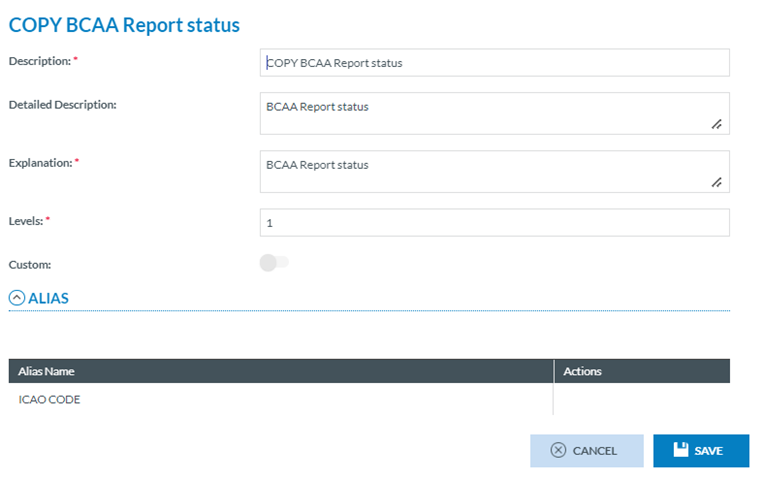
It reproduces the content of the specific Custom or Central Value List properties page and adds ‘COPY’ to the Description of the Custom Value List. National Security Administrators can update the needed fields always keeping the mandatory information filled and then they have to click on ‘Save’ button. The system will save the copied Custom Value List in the database and will add it to the table of Value Lists.
4.6.4.7. Delete a Custom Value List
National Security Administrators have to click on the Delete Value List option of the 3-dots menu of the table of Value Lists and the system will display a warning message, National Security Administrators have to confirm the action and the system will delete the Custom Value List from the database.
A Value List cannot be deleted if it is being referenced in an Attribute.
National Security Administrator cannot delete Central Value Lists.
4.6.4.8. Export a Value List to Excel
National Security Administrators have to click on the Export Value List option of the 3-dots menu of the table of Value Lists and the system will display the following warning disclaimer:
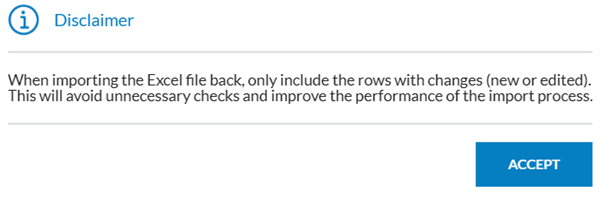
If National Security Administrators accept, the system will download an Excel with the Value List information; at the same time, the Value List will be locked and the system will display a locker on this Value List at the table of Value Lists.
4.6.4.9. Import a Value List from Excel
National Security Administrators have to update the needed fields in the excel file of the previous section. When the file is ready, National Security Administrators have to click on the ‘Import from Excel’ option of the 3-dots menu of the specific Custom Value List at the table of Value Lists and the system will display a Select File window:

National Security Administrators have to upload the file to the window through the Select Files button or by dragging and dropping it. Then, they have to click on ‘Yes’ button. The system will display a warning message:
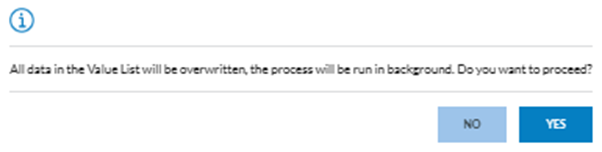
National Security Administrators have to confirm the action and the system will update the information of the Custom Value List in the database. This process can take some time so the system will send an email to the National Security Administrator when the process is finished.
National Security Administrators can use the export and import Value List options for Central Value List to update the Alternative Texts of the Values Description.
4.6.5. Review and correct inconsistencies and Release a Custom Taxonomy
National Security Administrators can check the inconsistencies of a Draft Custom Taxonomy through the Check inconsistencies icon placed on top of the Taxonomy manager:

This icon  reviews the inconsistencies, and the system will highlight in red in the Structure tab the items providing the inconsistencies, i.e.:
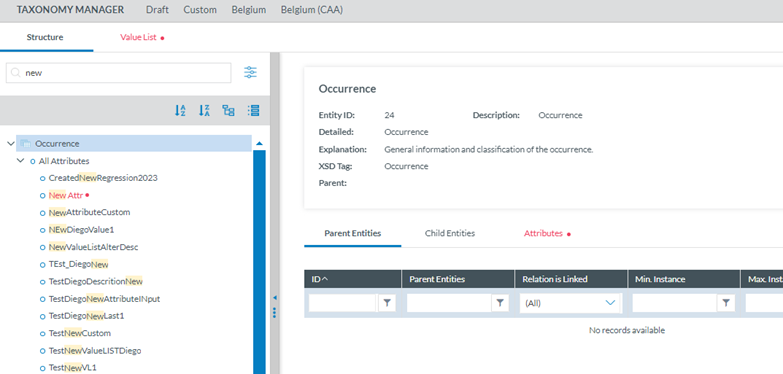
If there are inconsistencies in the Value List tab, it is also highlighted in red.
Once National Security Administrators find the inconsistencies and fix them, National Security Administrators can click on the Release icon:

This icon  publishes the Custom Taxonomy unless there are still inconsistencies, in that case, the system will display a message warning it.
Instead of through this icon, National Security Administrators can click on ‘Release’ option of the 3-dots menu of the Draft Custom Taxonomy of the list. This option publishes the Custom Taxonomy unless there are still inconsistencies, in that case, the system will display a message warning it.
4.7. Set Custom Taxonomy properties
National Security Administrators have to click on ‘Set Properties’ option of the 3-dots menu of the specific Not Archived Custom Taxonomy of the list. The system will display the specific Taxonomy Properties page:
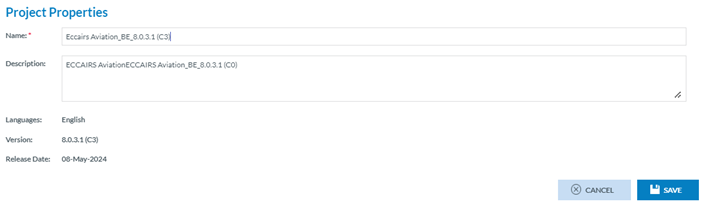
The only editable fields are the following:
· Name: it is mandatory and unique for each Taxonomy
· Description: optional
National Security Administrators can update the fields and click on ‘Save’, the system will save the information in the database and the table of Taxonomies will be updated accordingly.
4.8.
Only Draft Custom Taxonomies can be deleted at Authority level. National Security Administrators have to click on ‘Delete’ option of the 3-dots menu of the specific Custom Taxonomy of the list and the system will display a warning message. National Security Administrators have to confirm the action and the system will delete the Custom Taxonomy from the database and from the table of Taxonomies.
4.9. Taxonomy version number and name
The Custom Taxonomy version and name is built as follows:
· ‘ECCAIRS Aviation’ string concatenated with:
· Authority code - taken from the Authority details, followed by an underscore. i.e. BE_
· Four-digit version code, which shows the Central Taxonomy version on which the Custom is based. i.e. 8.0.3.1
· Custom version number, in parenthesis. E.g. (C1)
